
How Can I Verify the Quality of an Air Filter Supplier? 10 Factory Audit Checks Used by Professional Buyers
For distributors, auto parts wholesalers, fleet operators, and importers, selecting the right air filter supplier is one of the most important sourcing decisions.
A supplier may offer attractive pricing, but poor-quality filters can lead to customer complaints, warranty claims, engine damage, and lost business opportunities.
The challenge is that many suppliers look similar on paper. Most have websites, certifications, and product catalogs. However, experienced buyers know that verifying quality requires much deeper investigation.
This guide explains the same factory audit and quality control checks used by professional buyers when evaluating an air filter supplier or supplier of air filter products.
Why Verifying Supplier Quality Matters
Many buyers focus heavily on price during supplier selection.
In reality, the lowest-priced filter often becomes the most expensive option when quality problems occur.
Poor-quality air filters may cause:
- Reduced engine performance
- Increased fuel consumption
- Premature engine wear
- Higher maintenance costs
- Increased warranty claims
- Loss of customer trust
According to industry testing, low-grade filter media can allow significantly more contaminants to enter the engine compared with OEM-quality filters, reducing engine protection and service life.
Before placing a bulk order, buyers should conduct a systematic supplier evaluation process.
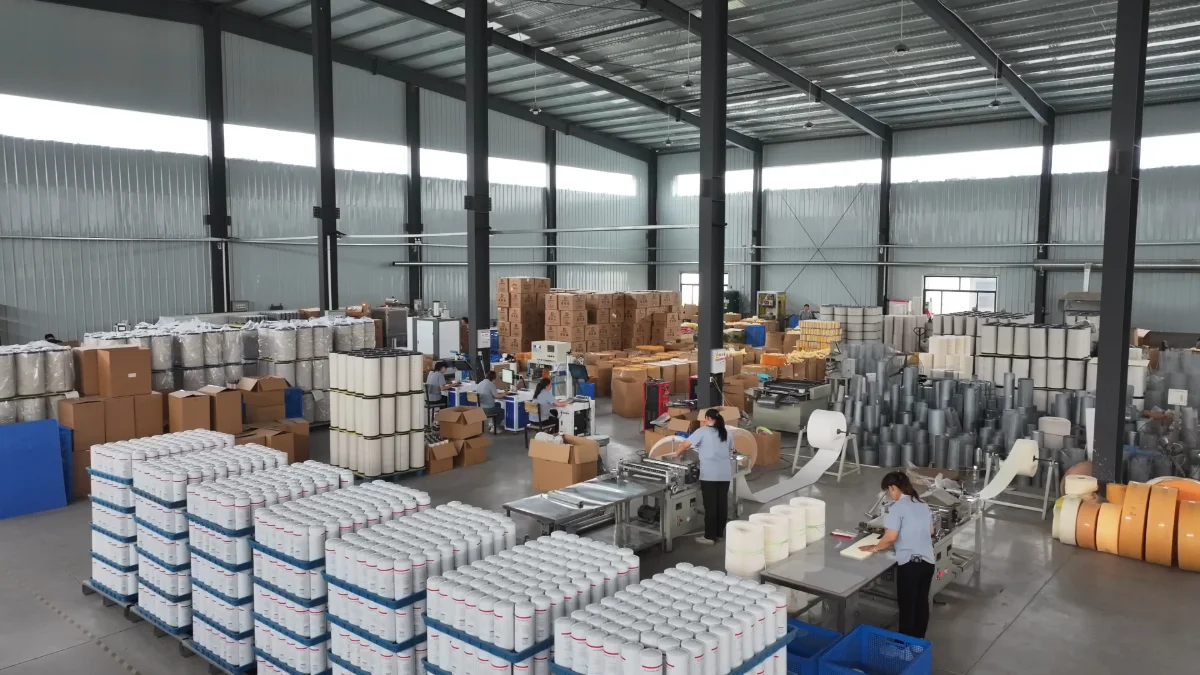
1. Verify That the Supplier Is a Real Manufacturer
One of the first steps is determining whether you are dealing with a factory or a trading company.
Ask for:
- Factory registration documents
- Production workshop videos
- Equipment photos
- Manufacturing process information
- Production capacity details
A genuine air filter manufacturer should be able to clearly demonstrate its production capabilities.
Factory Audit Tip
During a factory audit, pay attention to:
- Filter media storage area
- Pleating machines
- Assembly lines
- Quality inspection stations
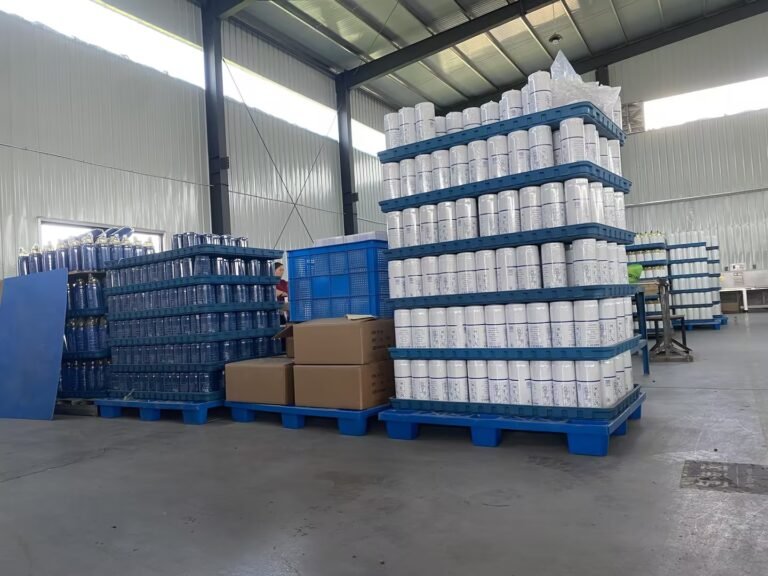
- Finished goods warehouse
Factories that hesitate to show production areas may not have complete manufacturing capabilities.
2. Don’t Rely on Certifications Alone
Many buyers assume that ISO certificates automatically guarantee quality.
This is a common mistake.
While certifications are important, they only demonstrate that management systems exist.
Relevant certifications include:
- ISO 9001
- IATF 16949
- ISO 14001
Professional buyers go beyond certificates and request actual production records and inspection reports from recent orders.
What to Ask For
- Latest audit reports
- Batch inspection records
- Incoming material inspection documents
- Customer complaint handling procedures
These documents often reveal more than a certificate hanging on a wall.
3. Check the Source of Filter Media
The filter media is the heart of every air filter.
Even a well-designed filter housing cannot compensate for poor-quality media.
Ask your supplier:
- Where is the filter media sourced?
- Is supplier qualification performed?
- What filtration efficiency is achieved?
- Is synthetic media available?
Reliable manufacturers maintain stable sourcing channels and perform incoming material inspections before production begins.
Industry Insight
During factory audits, experienced buyers often inspect the filter media warehouse first because material quality directly affects filtration performance.
4. Review the Quality Control System
A professional supplier should have documented quality control procedures covering every stage of production.
The process should include:
Incoming Inspection
Checking filter media, rubber components, adhesives, and metal parts.
In-Process Inspection
Monitoring pleat consistency, dimensions, and assembly quality.
Final Inspection
Verifying appearance, dimensions, packaging, and labeling before shipment.
Shipment Verification
Random sampling before loading containers.
If a supplier cannot explain its quality control process clearly, quality consistency may become a concern.
5. Request Product Test Reports
A reliable supplier of air filter products should be able to provide testing data.
Key tests include:
Filtration Efficiency Test
Measures the percentage of contaminants removed.
Airflow Restriction Test
Evaluates how freely air passes through the filter.
Dust Holding Capacity Test
Measures how much contamination the filter can retain.
Structural Integrity Test
Ensures the filter can withstand operating conditions without failure.
Test reports provide objective evidence of product performance.
6. Inspect Production Equipment
Production equipment often reflects a factory’s commitment to quality.
Look for:
- Pleating machines
- Automated assembly equipment
- Glue application systems
- Leak testing equipment
- Inspection devices
Modern equipment typically improves consistency and reduces manufacturing variation.
A factory still relying heavily on manual assembly may face challenges maintaining stable quality at large production volumes.
7. Evaluate OEM and Private Label Capabilities
Many distributors require private-label products.
An experienced OEM air filter supplier should be able to provide:
- Custom branding
- Private packaging
- Product labeling
- Technical support
- New product development
OEM experience usually indicates stronger production management and process control.
8. Analyze Export Experience
Export experience is often an overlooked indicator of supplier quality.
Ask:
- Which countries are served?
- How many years of export experience does the factory have?
- What percentage of production is exported?
Factories serving North America, South America, Europe, and the Middle East often have more mature quality systems because international customers typically maintain stricter standards.
9. Ask for Customer References and Case Studies
Quality suppliers are usually proud of their long-term customer relationships.
Ask for:
- Distributor case studies
- Fleet customer examples
- Long-term partnership references
Example
A truck parts distributor may switch suppliers after experiencing filter failures and warranty claims.
By selecting a manufacturer with documented quality control procedures and verified testing records, the distributor can significantly reduce product complaints and improve customer satisfaction.
Real-world examples often reveal more than sales presentations.
10. Conduct an On-Site or Virtual Factory Audit
Nothing replaces a factory audit.
If travel is not practical, request a live video factory inspection.
Inspect:
- Production lines
- Warehouse management
- Raw material storage
- Quality laboratory
- Packaging process
A transparent air filter supplier should be willing to provide visibility into daily operations.
The more open a supplier is, the lower the sourcing risk usually becomes.
Air Filter Supplier Audit Checklist
Before placing an order, use the following checklist:
| Audit Item | Status |
|---|---|
| ISO9001 Certification | □ |
| IATF16949 Certification | □ |
| Factory Audit Completed | □ |
| Filter Media Source Verified | □ |
| Test Reports Reviewed | □ |
| Quality Control Process Verified | □ |
| OEM Capability Confirmed | □ |
| Production Equipment Inspected | □ |
| Sample Evaluation Passed | □ |
| Export Experience Verified | □ |
Completing this checklist can significantly reduce sourcing risks.
Frequently Asked Questions
How do I know if an air filter supplier is a real manufacturer?
Request factory videos, production photos, equipment lists, and audit reports. Genuine manufacturers can usually demonstrate their production capabilities clearly.
Can ISO9001 certification guarantee product quality?
No. ISO9001 is an important indicator, but buyers should also review inspection records, testing reports, and factory operations.
What test reports should I request from a supplier?
Ask for filtration efficiency reports, airflow restriction tests, dust holding capacity tests, and structural integrity testing results.
Why is filter media quality so important?
Filter media directly affects filtration efficiency, airflow performance, and service life. Poor-quality media can reduce engine protection and increase maintenance costs.
Should I always visit the factory before placing an order?
For large-volume purchases, a factory audit is highly recommended. If an on-site visit is not possible, a live virtual factory inspection is a practical alternative.
Final Thoughts
Choosing an air filter supplier should never be based solely on price.
Professional buyers evaluate factory capabilities, quality control systems, testing procedures, certifications, and export experience before making sourcing decisions.
By conducting proper supplier verification and factory audits, distributors, wholesalers, and fleet operators can minimize risk, improve product consistency, and build long-term partnerships with reliable manufacturers.
The best supplier is not necessarily the cheapest one—it is the one that consistently delivers quality, transparency, and dependable performance.

2 Comments