
Why Do Some Truck Air Filters Fail Quickly? Causes & Solutions
You just installed a new set of air filters on your heavy-duty trucks a few weeks ago, and the maintenance dashboard is already flashing a restriction warning.Or worse—you’ve pulled the filter out during a routine check only to find it torn, collapsed, or completely caked in dust.
Premature air filter failure is one of the most frustrating and expensive after-sales issues for fleet managers and distributors. It leads to unexpected downtime, frequent replacement costs, and in the worst-case scenario, catastrophic engine damage from dust ingestion.
So, why do some truck air filters fail quickly while others last for their intended service life? The answer usually lies in the hidden flaws of the filter’s construction. Here is a technical breakdown of the four root causes of premature failure, and how to prevent it.
The 4 Root Causes of Premature Air Filter Failure
When an air filter fails long before its scheduled replacement interval, it is almost always due to one of these four manufacturing deficiencies:
1. Low-Quality Filter Media (The “Dust Choke”)
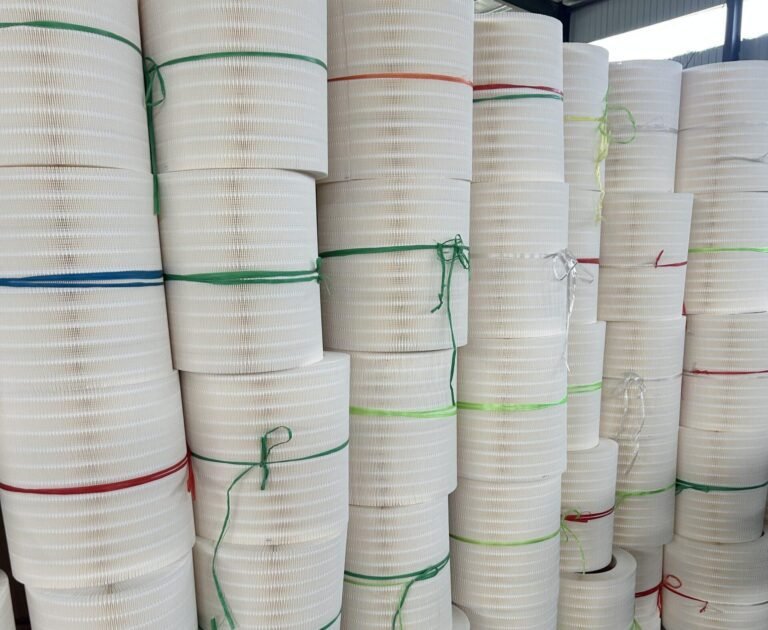
Standard, low-cost cellulose (paper) media features a uniform, random web of large pores. When exposed to the high-dust environments typical of construction sites or agricultural hauls, these pores quickly trap large particles on the surface, creating a “dust cake.”
While a slight dust cake actually helps filtration, low-quality paper lacks the depth and gradient structure to handle the load. The surface pores seal off entirely, causing a massive pressure drop (restriction) long before the filter has reached its actual Dust Holding Capacity (DHC). The engine suffocates, and you are forced to replace a filter that looks “half-empty” inside.
2. Weak Structural Integrity (The “Collapse & Rupture”)
Heavy-duty turbo-diesel engines create intense air pulses and high vacuum conditions. Under this stress, the filter media is constantly flexing.
Cheap filters often use brittle, unsubsidized paper and weak glue lines. Combined with the moisture ingested from rainy highways or humid environments, the paper loses its stiffness. The constant flexing causes the pleats to fatigue and crack, or worse, the entire inner element collapses against the intake pipe, tearing the media and allowing unfiltered dust straight into the turbocharger.
3. Poor Gasket and Seal Design (The “Bypass Leakage”)
A filter can have the best media in the world, but if the seal fails, it’s useless. One of the most common after-sales complaints is “dusted engines”—where fine silica dust bypasses the filter entirely.
This happens when manufacturers use low-density foam or cheap rubber gaskets that compress permanently over time, or when the sealing bead is slightly out of OEM tolerance. As the truck vibrates down the highway, microscopic gaps open between the filter and the housing, sucking unfiltered air directly into the engine.
4. Inadequate Pleat Count and Geometry
To save on material costs, some manufacturers reduce the number of pleats in a filter. Fewer pleats mean less total surface area, which forces the air to travel faster through the available media. This high-velocity airflow increases the pressure drop and aggressively drives dust deeper into the paper, accelerating the choking effect and reducing lifespan significantly.
The Hidden Cost of “Cheaper” Filters
For distributors and fleet managers, purchasing cheaper air filters often seems like a smart way to reduce part costs. However, a premature failure destroys those savings instantly:
- Increased Labor Costs: Changing filters twice as often means double the mechanic hours.
- Downtime: A clogged filter robs the engine of power and fuel efficiency; a ruptured filter takes the truck off the road entirely.
- Engine Damage: Replacing a turbocharger or rebuilding an engine due to dust ingestion costs tens of thousands of dollars—wiping out years of filter savings.
How to Choose a Long-Lasting Heavy-Duty Air Filter
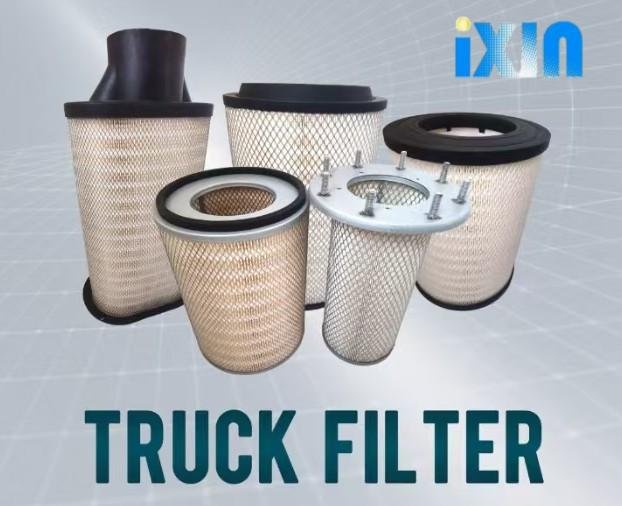
To eliminate after-sales complaints and extend service intervals, you need to look past the price tag and evaluate the filter’s engineering:
- Demand Blend or Synthetic Media: Look for filters utilizing a cellulose/synthetic blend. The synthetic fibers create a gradient depth filtration effect—trapping fine particles deep within the media while keeping surface pores open, drastically increasing Dust Holding Capacity.
- Inspect the Structural Support: High-quality air filters feature robust metal inner/outer screens and high-temperature, moisture-resistant expandable glue lines at the pleat tips to prevent chafing and collapse.
- Verify OEM Gasket Tolerances: Ensure the sealing gaskets are made from high-recovery polyurethane or premium silicone that matches the exact dimensions of the original equipment housing.
Eliminate After-Sales Issues with IXIN Filters
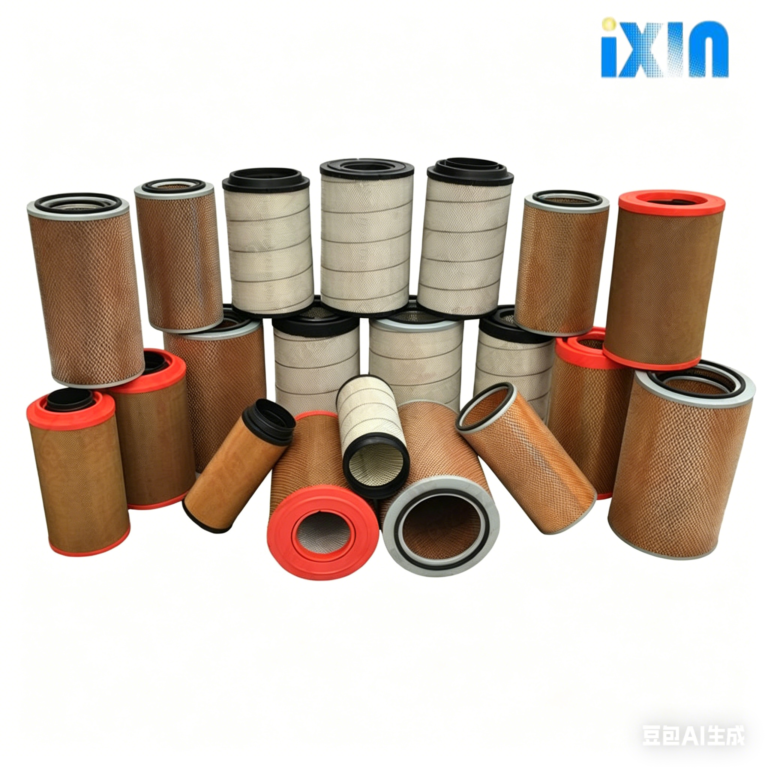
At IXIN, we understand that a filter failure isn’t just a part replacement—it’s a broken promise to your customer. That’s why our truck and heavy-duty air filters are engineered specifically to prevent premature failure:
- High-Capacity Media: We utilize premium blended filter media designed for maximum DHC, ensuring longer service intervals even in severe dust conditions.
- Vibration-Tested Construction: Every IXIN air filter features reinforced metal screens and robust pleat-tip glue lines to prevent collapse and rupture under heavy pulse loads.
- Precision OEM Fitment: Our strict OEM cross-reference process guarantees that the gasket dimensions and sealing force perfectly match the housing, eliminating bypass leakage.
Stop dealing with the headaches of fast-failing air filters. Upgrade to a manufacturer that prioritizes lifespan and engine protection.
Looking for a reliable air filter supplier with a near-zero defect rate? Browse our Heavy-Duty Truck Air Filter Catalog or Contact our B2B sales team today to discuss your wholesale and OEM requirements.

One Comment