A bulk order is a big commitment. If the filters do not fit, leak or clog early, you pay for the mistake in returns, lost customers and dead stock. Truck filter samples are the cheapest way to find those problems before they reach your warehouse. This guide explains how to evaluate truck filter samples step by step, covering labels, dimensions, seals, filter media and performance tests, and how to protect yourself from the gap between a good sample and a bad batch.
Why Truck Filter Samples Matter Before a Bulk Order
A catalog, a cross-reference and a price list tell you what a supplier says it can make. Truck filter samples show you what it actually makes. They let you:
- Confirm fit against the filter you are replacing, not just against a part number.
- Judge build quality by looking at seals, glue lines, end caps and pleats.
- Compare media with a reference filter.
- Test performance in a lab or on a truck.
- Gauge the supplier, including how carefully it packs, labels and communicates.
Evaluating truck filter samples properly also gives you something to measure later batches against. Without a reference, you cannot prove that a bulk shipment is worse than the sample.
Step 1: Set Your Reference and Request the Right Samples
Before you ask for truck filter samples, decide what you are comparing them with:
- A reference filter, such as the OE filter or the brand you currently sell, from your own stock.
- A specification sheet from the supplier, with dimensions, thread or seal type, cross references and, where available, test data.
- The application, including engine, truck model and year, so the supplier can check the match.
Then request samples carefully:
- Ask for more than one piece of each model, so you can see the variation between filters.
- Ask for samples from normal production stock, not hand-picked pieces.
- Ask for the same packaging and labels you will receive in bulk, so that you can judge the packaging as well.
- Note the supplier’s batch or date codes on the samples.
If you are building your own brand, send the artwork early. Our guide on private label truck filters explains the packaging and labeling side.
Step 2: Inspect Labels, Packaging and Markings
Start with the box before you open it. Check these points:
- The part number on the box and the filter match your order and each other.
- The printing is clear and free of spelling mistakes.
- The country-of-origin marking is present and legible if you are importing.
- Any barcode scans correctly, if you plan to sell through retail.
- The carton is strong enough for stacking and shipping, and the filter is protected inside.
- The filter itself carries a legible part number and batch or date code.
Poor packaging is a warning sign. A supplier that cuts corners on the box may cut corners elsewhere.
Step 3: Check Dimensions and Fit
Measure every one of your truck filter samples against the reference. Use calipers, a ruler and thread gauges where needed. The right measurements depend on the filter type:
| Filter type | What to measure |
|---|---|
| Spin-on oil or fuel filter | Height, outside diameter, thread size and pitch, gasket inside and outside diameter, anti-drain valve |
| Cartridge or element (oil, fuel) | Height, outside diameter, inside diameters, end cap shape, seal positions |
| Panel air or cabin filter | Length, width, thickness, frame shape |
| Radial seal air filter | Height, outside diameter, inside diameter, seal shape |
Write the numbers down and compare them with the specification sheet and with your reference filter. A few millimeters can mean a poor fit, especially on the inside diameter of a radial seal element or on a spin-on thread. After measuring, fit the sample into the housing or onto the engine whenever you can. A filter that measures correctly but does not seat properly is still a failed sample. Our filter cross reference guide explains why a matching part number is never a substitute for a fit check.
Step 4: Inspect Seals and Gaskets
A bad seal makes a good filter useless. Check each sample for:
- Material and feel: the seal should be supple, not hard, brittle or sticky.
- Condition: no cuts, flat spots, twists or loose pieces.
- Position: the seal should sit centered and evenly in its groove or on its end cap.
- Size: compare thickness and diameter with the reference.
- Seating: the seal should press evenly against the sealing surface.
For radial seal air filters, check that the seal slides onto the outlet tube smoothly and holds firmly without gaps. For spin-on filters, check the gasket and make sure it stays in its groove. Then run a short test installation and look for leaks, since leaks only show up under pressure and heat.
Step 5: Examine Media and Construction
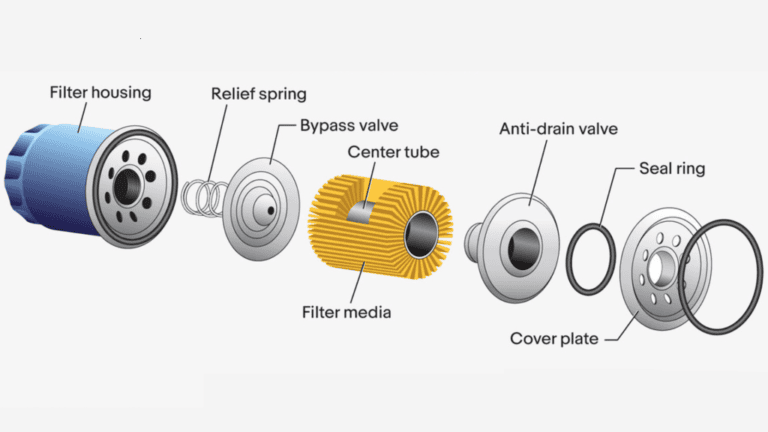
The filter paper does the actual filtering, so look inside the truck filter samples as well as outside. Compare each sample with the reference for:
- Pleat count and spacing: even pleats use the whole media area, while crowded or uneven pleats reduce capacity.
- Media appearance: consistent color and texture, with no tears, holes, stains or wrinkles.
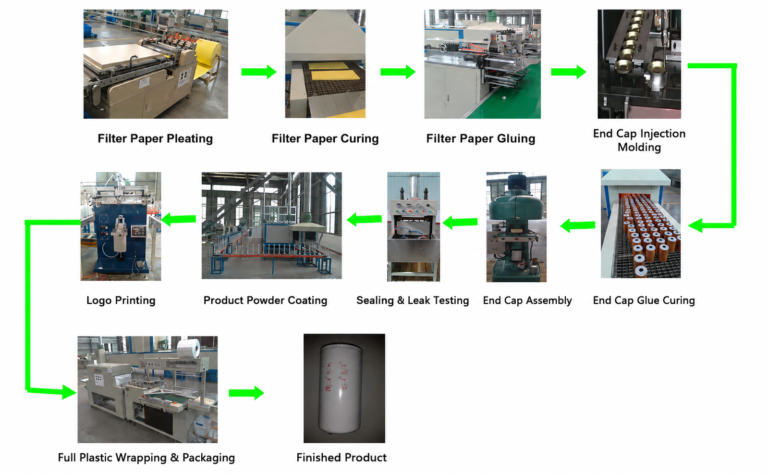
- Bonding: clean, continuous glue lines and end-cap bonding with no gaps.
- Center tube, screens and metal parts: solid construction with no sharp edges, rust or deformation.
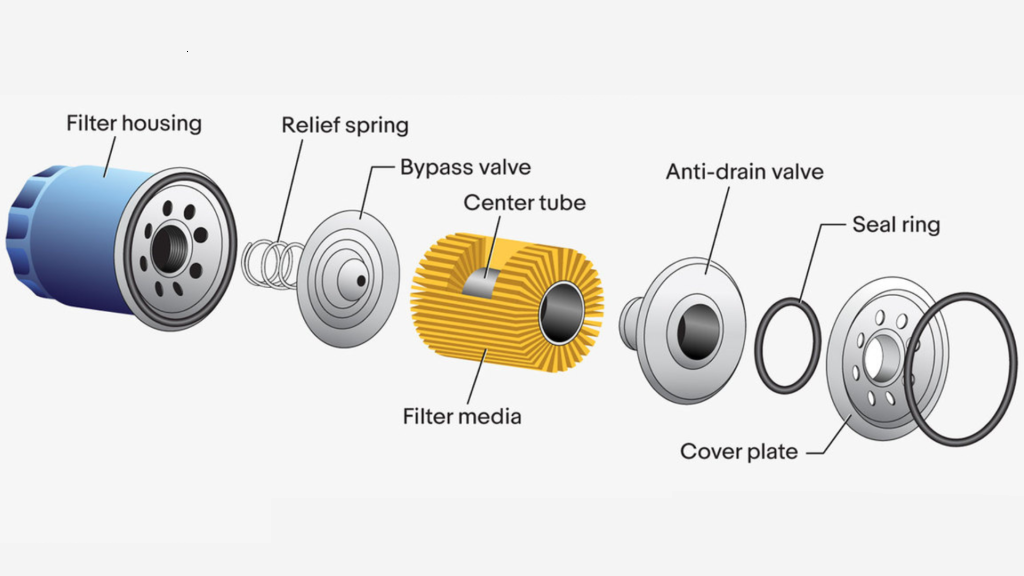
- Valves and springs: correct components present and working, such as anti-drain or relief valves.
It helps to cut open one of the truck filter samples and compare its inside with the reference. Ask the supplier which filter paper and grade it uses, and for the media supplier’s name. Our article on how high-quality filter paper improves truck air, oil and fuel filter performance explains what to ask.
Step 6: Run or Request Performance Tests
Looks and measurements are not enough. Performance has to be tested. Standard test methods give everyone the same yardstick:
- Air filters: ISO 5011 covers airflow restriction, dust collection efficiency and dust capacity.
- Oil filters: ISO 4548-12 describes a multi-pass test with online particle counting that measures contaminant capacity, particulate removal and differential pressure.
- Fuel filters: ISO 19438 uses a similar multi-pass method for diesel fuel and petrol filters.
Structural checks matter too. Hydraulic filter standards describe tests for collapse and burst resistance and for fabrication integrity using a bubble-point test. They are written for hydraulic filter elements, so ask your supplier which method it applies to your engine filters and how.
When you review test data, ask:
- Which standard and which test conditions were used?
- Was the test run on the same model as the truck filter samples you received?
- Was it done in the supplier’s own lab or by an independent lab?
- How does the result compare with the reference filter under the same conditions?
If you cannot run lab tests yourself, ask the supplier for a report, or send a sample to an independent lab. Be careful with claims such as “meets OE specifications” that come without data.
Step 7: Run a Field Trial
A lab shows how a filter behaves under controlled conditions. A truck shows how it behaves in real life. Give truck filter samples to a few trusted workshops or fleets and ask them to:
- Record the truck, engine, mileage and date of installation.
- Check for leaks, noise or warning lights after installation.
- Track restriction indicator readings on air filters, oil pressure on oil filters, and any fuel system symptoms on fuel filters.
- Note how the filter looks when it is removed at the next service.
- Give written feedback on fit and ease of installation.
A trial of a few weeks or one service interval, depending on the filter, will show problems that a bench test cannot. Keep records so that you can compare the sample against the reference.
Step 8: Plan for the Risk Between Sample and Bulk Order
Even excellent truck filter samples do not guarantee a good batch. The gap between a sample and a production run is one of the biggest risks in a bulk order. Reduce it with these steps:
- Keep an approved sample and ask the supplier to keep one as well, and use both as the reference for every batch.
- Start with a pilot order instead of your full volume. Our guide on reducing inventory costs when buying truck filters in bulk explains how to size orders by total cost.
- Agree on pre-shipment inspection. An inspection can use a sampling plan indexed by acceptable quality limit, such as the scheme in ISO 2859-1, to decide whether a lot is accepted.
- Require batch or date codes on filters and cartons, so that you can trace a problem to its source.
- Write down change control. The supplier should not change filter paper, dimensions or components without telling you and getting your approval.
- Agree on claims. Decide in advance how defective lots are handled and who pays.
- Inspect the first shipment on arrival. Check a sample of cartons against your approved sample and take photos before you distribute the stock.
Truck Filter Samples Evaluation Checklist
| Check | What to look for | Result |
|---|---|---|
| Labels and packaging | Correct part number, clear printing, strong carton, origin marking | Pass / Fail |
| Dimensions | Matches specification and reference within tolerance | Pass / Fail |
| Fit | Seats correctly in housing or on engine | Pass / Fail |
| Seals and gaskets | Soft, undamaged, centered, no leaks after test | Pass / Fail |
| Pleats and media | Even pleats, uniform media, no damage | Pass / Fail |
| Bonding and metal parts | Continuous glue lines, solid end caps and center tube | Pass / Fail |
| Performance data | Test report with named standard, same model, compared to reference | Pass / Fail |
| Field trial | No leaks or problems, positive feedback | Pass / Fail |
| Batch consistency | Several pieces look and measure the same | Pass / Fail |
Red Flags When Reviewing Truck Filter Samples
- No specification sheet or dimensions that change from one message to the next.
- Samples that differ from each other in size, seal or pleat count.
- A supplier that refuses to name the media or to share any test data.
- Hand-picked samples that look far better than the filters in a normal carton.
- Pressure to order immediately before you have finished testing.
- Vague answers about batch codes, inspection and claims.
FAQ
Q: How many truck filter samples should I ask for?
A: Ask for at least two or three pieces of each model so you can see variation, and more if you plan to destroy one for inspection.
Q: Can I trust a sample that looks perfect?
A: A good sample shows what the supplier can make, not what every batch will be. Keep an approved reference, start with a pilot order and agree on inspection.
Q: What should I measure first?
A: Start with the dimensions that decide fit: height, outside diameter, inside diameter and thread or seal size, compared with your reference filter.
Q: Do I need laboratory testing for every model?
A: Not necessarily. Test the models that matter most to your sales, ask for supplier data on the rest, and use field trials to catch practical problems.
Q: Should I pay for truck filter samples?
A: Sample terms vary by supplier and model. Get in touch with us to ask about sample availability for the models you need.
Q: What are the MOQ and lead time for the bulk order?
A: In-stock goods generally ship in 5 to 10 days, and made-to-order items take 15 to 45 days, depending on quantity. Contact our sales team for MOQ on the models you need.
Ready to evaluate truck filter samples? Send us the models, OE numbers and applications you want to check, and we will reply with specifications and sample information. You can also browse our air filters, oil filters and fuel filters, or read our guide to building a profitable truck filter product line.
Email: sales@ixinfilters.com | WhatsApp: +86 18833443345 | Get a quote