
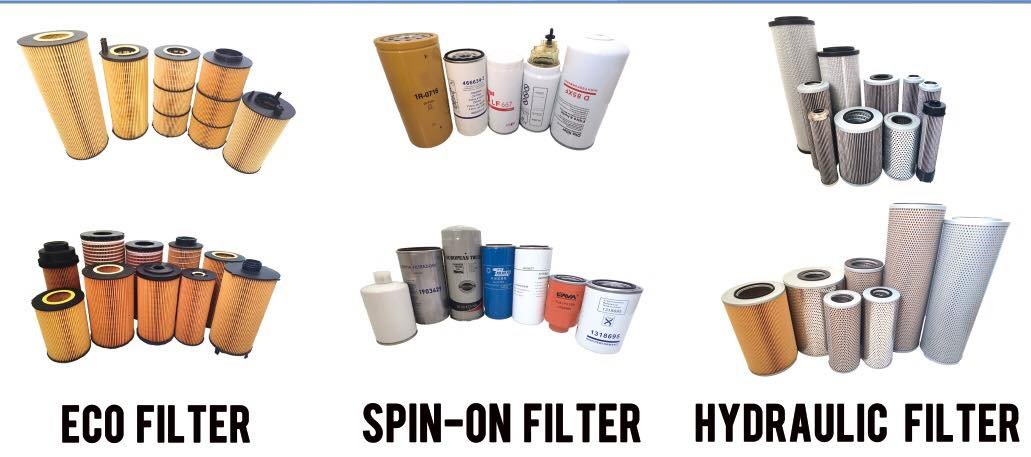
A well-planned truck filter product line is one of the most dependable ways for a distributor to build repeat business. Every truck needs air, oil, fuel and cabin filters on a schedule, so sales follow maintenance cycles instead of one-off repairs. But a truck filter product line only pays off when the range matches what your customers actually run, with the right stock depth, pricing and supplier behind it. This guide walks through seven steps to plan a truck filter product line that covers air, oil, fuel and cabin filters without tying up cash in slow-moving stock.
Why a Truck Filter Product Line Works for Distributors
Filters are consumable parts. They are replaced at set intervals, whether or not anything has broken, which makes demand easier to predict than for most truck parts. A truck filter product line also gives you several reasons to sell to the same customer: a workshop that buys oil filters can also need fuel, air and cabin filters for the same job. Filters are compact compared with many heavy duty parts, so they are easier to store, ship and sell in kits.
The risk is complexity. Heavy duty trucks run many engine types, housings and thread sizes, so a range built without a plan quickly fills the warehouse with part numbers that rarely sell. The steps below help you avoid that.
The Four Core Categories in a Truck Filter Product Line
| Category | What it protects | What drives replacement | Stocking note |
|---|---|---|---|
| Air filters | Engine intake and turbocharger | Dust level, restriction indicator and the engine maker’s interval | Bulky, so stock fewer part numbers and check housing type and dimensions carefully |
| Oil filters | Bearings, pistons and moving parts | Engine service interval | Typically changed most often and available in a wide range of part numbers |
| Fuel filters | Injectors and fuel pumps | Service interval and fuel quality | Check thread, connection and whether a water separator is needed |
| Cabin air filters | Driver comfort and the HVAC system | Time in service and the working environment | Easy add-on that customers often forget |
Replacement timing depends on how and where the truck works. Fleetguard’s guidance for fleet managers notes that air filter replacement is rarely a simple calendar decision and depends on operating conditions, routes and loads. Cabin filters are often overlooked: a Ryder field maintenance manager recommends checking cabin air filters at every service interval and replacing them as needed, usually about twice a year. For a distributor, that makes cabin filters a simple way to add value to every filter order.
Step 1: Know Who Will Buy Your Truck Filter Product Line
Different customers buy in different ways, so decide who you are building the range for:
- Independent workshops want fast availability and accurate cross references.
- Fleets want consistent quality and volume pricing.
- Parts retailers and online sellers want clear packaging and easy part number lookup.
- Construction, farming and mining customers want strong air filters for dusty work and reliable fuel filters for long hours.
Then find out which trucks and engines are most common in your market. Use your own sales history, local registration data and customer questions. This vehicle list is the foundation of your truck filter product line, because every part number you add should connect to a truck or engine your customers actually service.
Step 2: Start With the Part Numbers That Move
Your first truck filter product line should be small and built from demand. In most distribution ranges, a limited group of part numbers produces most of the sales. Find those for each category and stock them first. A simple three-tier structure works well:
- Core stock: the best sellers for the most common engines in your market. Keep these in stock at all times.
- Extended range: slower sellers that you hold in small quantities and top up with each shipment.
- Special order: rare part numbers that you order only when a customer asks, with a clear lead time.
Review sales every quarter. Move part numbers up or down the tiers, and drop the ones that do not sell.
Step 3: Build Your Truck Filter Product Line Around Cross References
A cross reference links one aftermarket part number to the OE number and to equivalent numbers from several other brands. This is what lets a smaller range cover more demand. For example, the LAF4505 radial seal air filter is listed in public catalogs against Luber-Finer LAF4505, Donaldson P532505 and Baldwin RS3510, so one part number can answer customers who ask for any of them.
Cross references are a starting point, not a guarantee. Always check dimensions, thread size, seal type and housing before you buy in volume. Our filter cross reference guide explains how to verify part numbers before a bulk order.
Step 4: Decide Your Quality Tiers
Many distributors offer two levels: a value line and a premium line. Whatever you choose, keep the quality of each tier consistent. A customer who gets a bad filter from one batch rarely gives the next batch a chance.
Quality starts with the filter paper. Media decides how much contamination a filter captures and how long it lasts, which is why it matters to every truck filter product line. Our article on how high-quality filter paper improves truck air, oil and fuel filter performance explains what to look for.
Ask your supplier for test data. Air filters, for example, can be compared using the ISO 5011 performance test, which measures airflow restriction, dust collection efficiency and dust capacity. Test reports show whether a supplier knows its own products, and they help you answer technical questions from buyers.
Step 5: Price for Margin and Bundle for Basket Size
Pricing rules keep a truck filter product line profitable:
- Price fast-moving part numbers competitively, because customers compare them most.
- Keep healthier margins on slower and special-order items, where convenience matters more than price.
- Create service kits by engine, such as oil, fuel, air and cabin filters in one package, to raise the value of each order.
- Offer simple volume breaks instead of many discount levels, which are hard to manage.
Decide your margin by category from your own costs, freight and customs, and check it again whenever supplier prices or exchange rates change.
Step 6: Plan Stock, MOQ and Lead Times
Cash tied up in stock is the biggest cost of a truck filter product line. Plan it with these points:
- Order cycle: decide how often you reorder, and size each order to cover demand until the next shipment arrives.
- Safety stock: hold extra only for fast sellers, where running out costs you sales.
- MOQ: ask whether the supplier’s minimum applies per part number or per order. Mixed orders of several part numbers help you add range without overbuying.
- Lead time: compare in-stock lead time with made-to-order lead time, then add shipping and customs time. At IXIN, in-stock items usually ship in 5 to 10 days, and made-to-order items take 15 to 45 days, depending on quantity.
Step 7: Choose a Supplier Who Can Grow Your Truck Filter Product Line
Your supplier decides how reliable your range will be. Look for:
- Factory-direct supply, so you deal with the manufacturer and not a middle layer.
- Accurate cross references and dimension data for every part number.
- Known media sources and test reports, not just a price list.
- Sample orders, so you can check pleats, bonding, seals and packaging yourself.
- Customization, including private label, packaging and filter paper quality, to build your own brand.
- Consistent quality between batches, which matters more than a single good sample.
- Quick, clear communication, because cross-reference questions come up all the time.
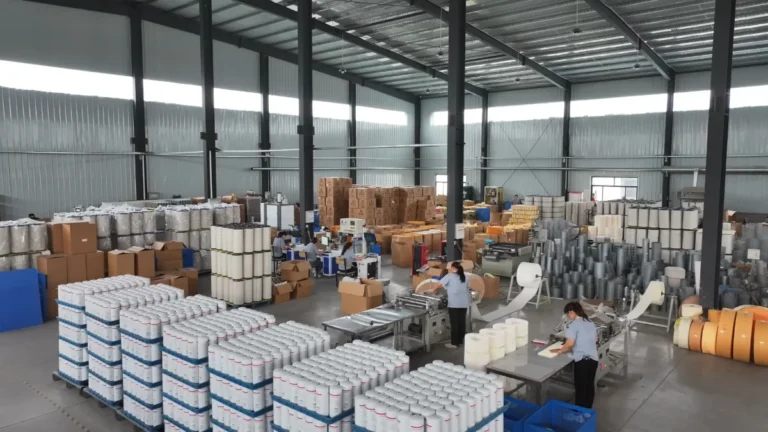
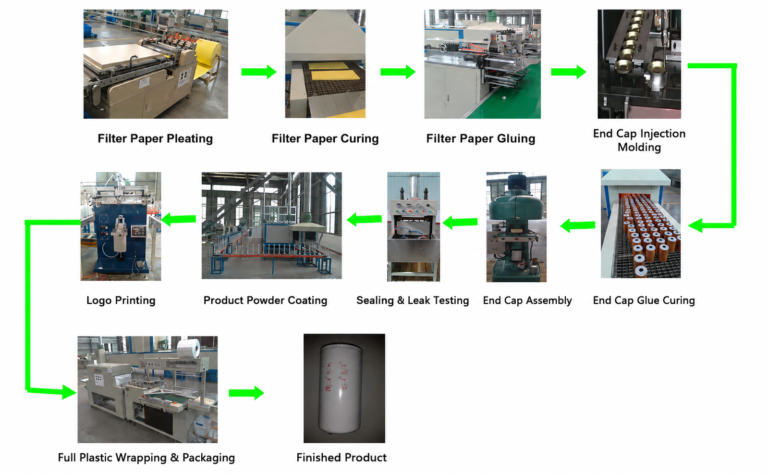
IXIN manufactures filters in its own factory in Linxi County, Hebei, and supports customization of filter paper quality, metal thickness and packaging for your market. You can browse our air filters, oil filters and fuel filters to see the part numbers we supply.
Common Mistakes That Weaken a Truck Filter Product Line
- Too many part numbers too soon, which locks up cash in slow stock.
- Ignoring cabin filters, even though they are an easy add-on to every service.
- Trusting cross references without checking dimensions, which leads to returns.
- Buying on price alone, without asking about media and test data.
- No packaging plan, which makes the range hard to sell and impossible to brand.
- Never reviewing sales, so dead stock builds up and fast sellers run out.
FAQ
Q: How many part numbers should a new truck filter product line start with?
A: There is no fixed number. Start with the best-selling part numbers for the most common trucks and engines in your market, and expand using sales data.
Q: Should I include cabin air filters in my truck filter product line?
A: Yes, if your customers service trucks regularly. Cabin filters are small, easy to stock and often forgotten, so they work well as an add-on to air, oil and fuel filter orders.
Q: How do I check a cross reference before ordering?
A: Compare the OE number, dimensions, thread or connection type, and seal type against a sample or drawing. Ask your supplier to confirm the match and, when possible, order a sample first.
Q: Can I sell filters under my own brand?
A: Many distributors do. IXIN supports customized packaging and filter paper quality, so contact us with your requirements.
Q: What are the MOQ and lead time?
A: In-stock goods generally ship in 5 to 10 days, and made-to-order items take 15 to 45 days. Get in touch with us for MOQ on the part numbers you need.
Q: Can IXIN help me plan a starter range?
A: Yes. Send us the trucks and engines you service, and we can suggest part numbers and send specifications and a quotation.
Ready to plan your truck filter product line? Send us your target market, the trucks you serve and the part numbers you already sell, and we will reply with specifications and a quotation.
Email: sales@ixinfilters.com | WhatsApp: +86 18833443345 | Get a quote
3 Comments