
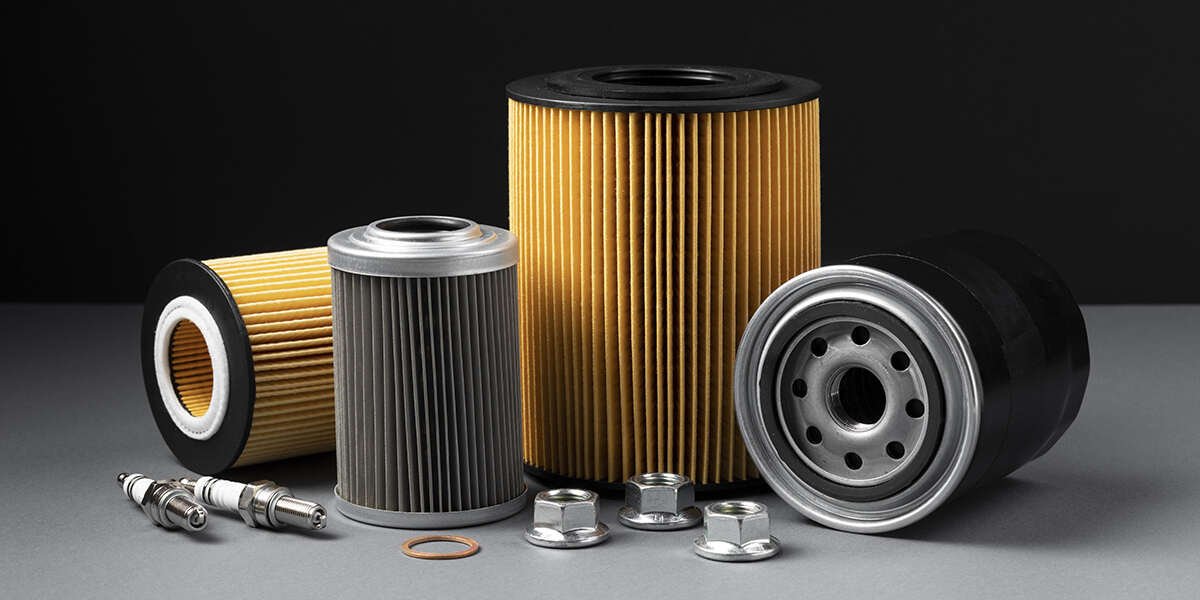
Choosing the right truck filter models decides whether a US distributor’s warehouse earns money or collects dust. The heavy duty aftermarket runs on a small number of engine platforms, and the truck filter models that serve them sell far faster than everything else on the shelf. This guide explains which engine platforms drive demand, which truck filter models to stock for each, and how to plan inventory so you can fill orders quickly without tying up cash.
Why US Demand Favors Stable, Repeatable Truck Filter Models
The US Class 8 fleet is getting older, and that favors aftermarket parts. FleetOwner reported in February 2026 that the average Class 8 truck age had reached a 12-year high while EPA 2027 emission rules were approaching, and January orders were strong despite mixed economic signals. At the same time, a Noregon white paper summarized by Trucking Info estimates about 258,000 Class 8 trucks were sold in 2025 and forecasts 245,000 in 2026, noting that the active Class 8 population continues to grow. Its headline conclusion is that uptime, not growth, will define 2026.
For a distributor, the takeaway is simple. Trucks already on the road keep working, so they keep needing the same truck filter models for years. These figures describe the truck market, not filter sales, so use them as context and let your own sales history decide quantities.
Which Engine Platforms Drive Demand for Truck Filter Models
Engine platform is the best starting point for choosing truck filter models, because oil, fuel and often air filters are tied to the engine. According to Ward’s data reported by Transport Topics for the first half of 2021, Detroit supplied 34.6% of Class 8 engines in North America, Cummins 33.5%, PACCAR 12.7% and Volvo 8.7%. The same report shows PACCAR’s Kenworth and Peterbilt brands taking almost 64% of Cummins’ larger Class 8 engines, which means Cummins ISX engines are common in those trucks. Cummins also dominates smaller Class 8 engines: it held 87.5% of engines under 10 liters in the first half of 2020, many of them in vocational trucks such as dump trucks.
These shares count new engines installed in a period, not trucks in operation, and the data is not recent. Treat them as a guide to which platforms deserve attention, and check current registration data for your region.
From this, four platforms make a practical starting point for truck filter models:
- Detroit DD13, DD15 and DD16
- Cummins ISX15
- Cummins mid-range engines (ISC, ISL, ISM and similar)
- PACCAR-powered and ISX-powered Kenworth and Peterbilt trucks
Truck Filter Models to Stock for Each Platform
The table lists truck filter models that public catalogs associate with each platform. Numbers are OE and brand reference numbers that your aftermarket supplier should be able to match. Always confirm engine, model year and OE number before ordering.
| Platform | Oil filter models | Fuel and fuel-water separator models |
|---|---|---|
| Detroit DD13 / DD15 / DD16 | Donaldson P551005, Baldwin P7405, Fleetguard LF17474 / LF17511, WIX 57909 | Two-filter module kit (Detroit A4720900451, Donaldson P551063); three-filter module kit (Detroit A0000904251, Donaldson P550954, WIX 33849, Luber-Finer L5091F) |
| Cummins ISX15 | Donaldson P559000 (replaces Fleetguard LF9080 / LF14000NN) | Fuel-water separator Donaldson P550849 (Fleetguard FS19764); secondary fuel filter Fleetguard FF5776 |
| Cummins ISC / ISL / ISM / N14 | Fleetguard LF9009 (Cummins 3401544) | Fleetguard FS1000 fuel-water separator (Cummins 3329289) |
| Kenworth / Peterbilt (MX-11 and ISX) | Check by engine and model year | PACCAR K37-1022 (Luber-Finer L5115F, Baldwin PF46081) |
Detroit: stock both fuel kit types
Detroit’s service notice explains that the company began building EPA10 DD15 engines with a two-filter fuel module in September 2012, while earlier engines use a three-filter module, and each has its own service kit. A distributor who stocks only one kit type will lose sales on the other. Sell the oil filter and fuel kit together as a service pair, since both are replaced at routine service.
Cummins ISX15: sell it as a set
ISX15 service usually involves an oil filter, a fuel-water separator and a secondary fuel filter, and catalogs commonly sell them as kits. Stocking the three truck filter models as individual parts and as a kit lets you serve both the workshop that needs one filter and the fleet that wants everything in one box.
Cummins mid-range: watch the upgrade paths
The LF9009 is listed for Cummins ISC, ISL, ISM, N14, QSL, NTA and M11 engines. FinditParts notes that later Fleetguard numbers such as LF14009NN and LF14002NN are upgrade paths, but they should not be treated as interchangeable with the LF9009. Lookalike numbers are a common source of returns, so check the engine and the original filter number.
Kenworth and Peterbilt: model-year dependent
The L5115F, which replaces PACCAR K37-1022, is listed for Kenworth trucks from 2016 with PACCAR MX-11 and Cummins ISX engines, and for Peterbilt. Our L5115F fuel filter page lists its cross references and specifications. For oil and air filters on these trucks, confirm by engine and model year instead of assuming.
Air and Cabin Filters: Choose by Housing, Not Just Engine
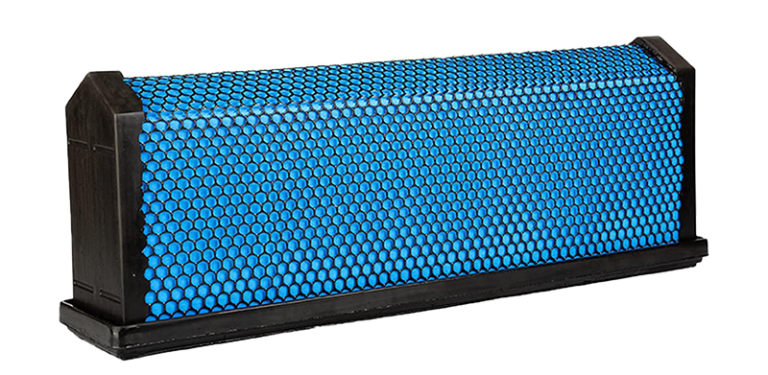
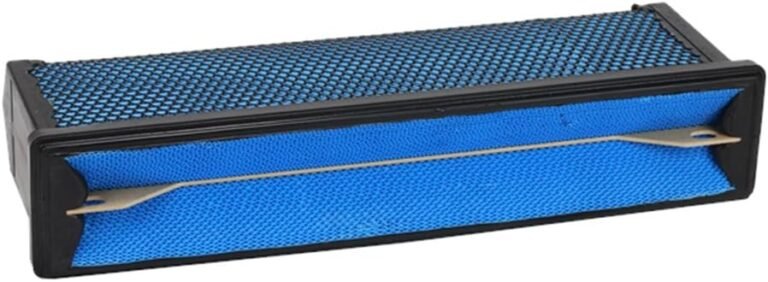
Air and cabin truck filter models follow a different logic. Heavy duty air filters are chosen by housing and dimensions as much as by engine. For example, Luber-Finer’s LAF3302 radial seal air filter is listed for Kenworth and Peterbilt trucks that use a Donaldson ERA15 housing. Our LAF4505 radial seal air filter page shows the kind of data you need: height, outside diameter, inside diameter and cross references. Check these against the old element before you order.
Cabin filters need fewer part numbers but sell often. A Ryder field maintenance manager recommends checking cabin air filters at every service and replacing them as needed, usually about twice a year. That makes cabin filters an easy add-on to every oil and fuel order. For the wider range planning, see our guide on building a profitable truck filter product line.
How to Tier Your Truck Filter Models
Do not stock every number at once. Split your truck filter models into three tiers:
- Core tier: the oil, fuel and air models for the four platforms above that sell every month. Keep these in stock at all times, as singles and as kits where the platform uses kits.
- Extended tier: slower models for older engines or less common trucks. Hold small quantities and refill with each shipment.
- Special-order tier: rare numbers you order only on request, with a clear lead time quoted to the customer.
Review sales every quarter. Promote models that sell faster than expected, and drop those that stall.
Inventory Planning Rules for US Truck Filter Models
- Start from your own sales history and local customers. Platform data tells you where to look, but your invoices tell you what actually sells.
- Hold safety stock only for fast sellers. Running out of a core oil or fuel filter costs the sale and the customer’s trust, while running out of a rare model rarely does.
- Plan lead time end to end. At IXIN, in-stock items usually ship in 5 to 10 days and made-to-order items take 15 to 45 days, depending on quantity. Add ocean freight, customs clearance and inland delivery to those figures.
- Mix models in each container. Ask your supplier whether the MOQ applies per model or per order, so that you can add range without overbuying one number.
- Check classification and duties before you price. Parts catalogs list oil and fuel filters under HTS heading 8421.23 and intake air filters under 8421.31, but confirm the correct classification with your customs broker. Duties and import rules on imported parts have changed repeatedly, so calculate landed cost before you set resale prices.
- Require clear labeling. Each carton and filter should show the part number, and your supplier should provide English cross-reference data with OE numbers.
Common Mistakes When Choosing Truck Filter Models
- Stocking by brand name instead of by platform, which scatters money across numbers that serve the same trucks.
- Missing kit variants, such as the two Detroit fuel module kits, which turns one platform into lost sales.
- Treating lookalike numbers as interchangeable, including upgraded or superseded models.
- Skipping dimension checks on air filters, where housing and seal type matter as much as the engine.
- Ignoring cabin filters, even though they add easy value to every service.
- Never reviewing sales, so slow models pile up and fast models run out.
FAQ
Q: How many truck filter models should a new US distributor stock?
A: There is no fixed number. Start with the core oil, fuel and air models for the engine platforms your customers run, and expand from sales data.
Q: Which truck filter models should I stock first?
A: Start with Detroit DD13, DD15 and DD16, Cummins ISX15, Cummins mid-range engines and Kenworth and Peterbilt applications, then add models based on what your customers ask for.
Q: Are cross-reference numbers enough to place an order?
A: No. Compare the OE number, dimensions, thread or connection and seal type against a sample or drawing, and ask your supplier to confirm the match. Our filter cross reference guide explains the process.
Q: How does filter quality affect which models I should buy?
A: Quality decides how long a filter lasts and how well it protects the engine, so it matters most on the fast-selling models. Read how high-quality filter paper improves truck air, oil and fuel filter performance.
Q: What are the MOQ and lead time?
A: In-stock goods generally ship in 5 to 10 days, and made-to-order items take 15 to 45 days. Get in touch with us for MOQ on the models you need.
Q: Can IXIN supply private label packaging for the US market?
A: We support customized packaging, filter paper quality and metal thickness. Contact our sales team with your requirements.
Ready to plan your US truck filter models? Send us the engine platforms you serve and the part numbers you already sell, and we will reply with specifications and a quotation. You can also browse our air filters, oil filters and fuel filters.
Email: sales@ixinfilters.com | WhatsApp: +86 18833443345 | Get a quote
OE and aftermarket part numbers are listed for reference only. All brand names belong to their respective owners, and IXIN is not affiliated with them.

One Comment