
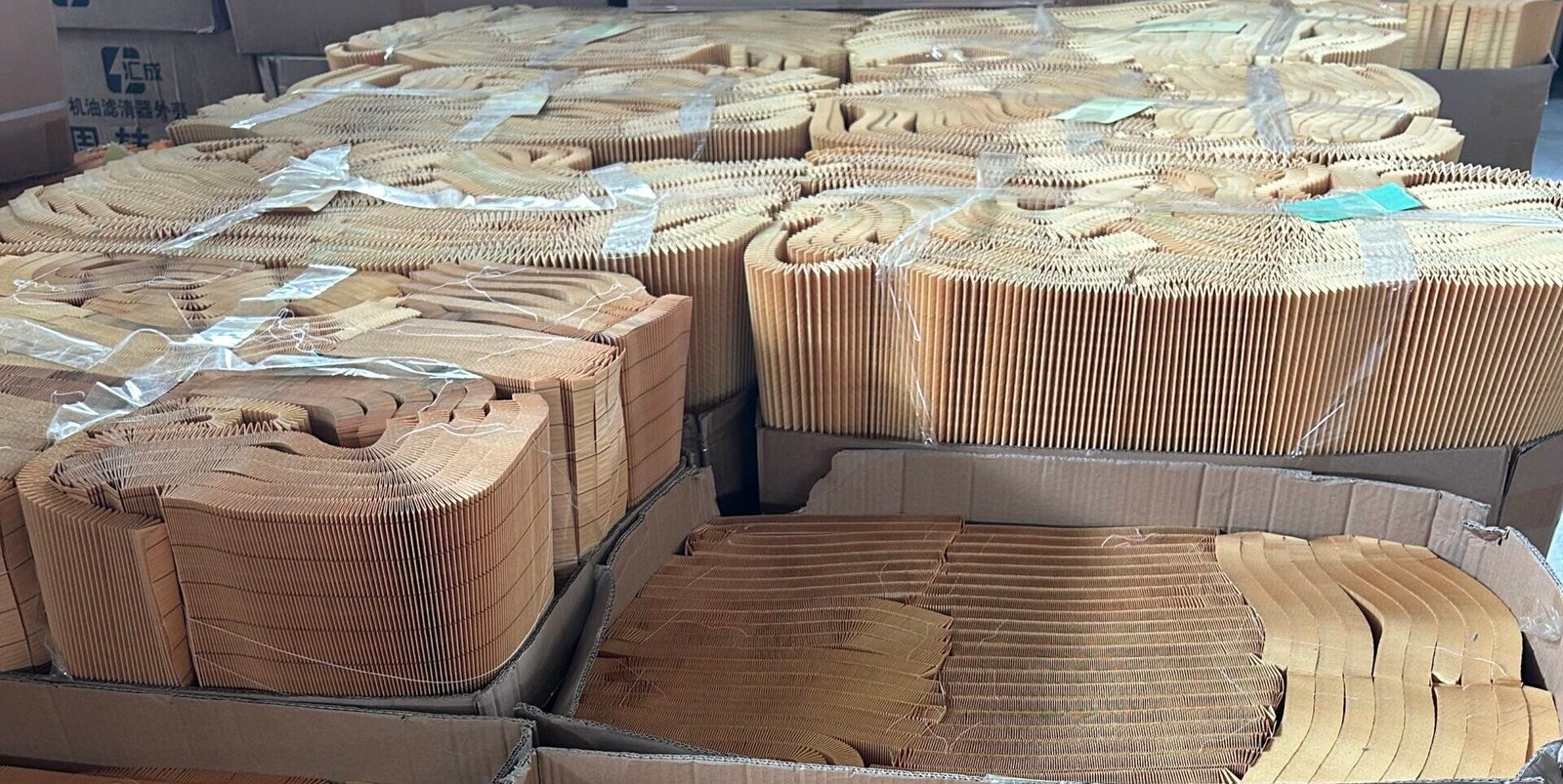
Two truck filters can look identical on the outside and perform very differently on the inside. The difference is usually the media. High-quality filter paper decides how much contamination a filter captures, how long it lasts before clogging, and how well it protects the engine. This article explains what filter paper does in truck air, oil and fuel filters, which properties matter most, and how to check media quality before you place an order.
What High-Quality Filter Paper Does Inside a Truck Filter
The housing, end caps and seals hold a filter together, but the filter paper does the actual filtering. It is a porous fiber structure that lets air, oil or fuel pass through while holding back solid particles. Three things happen at once:
- Particles are captured at the surface and inside the depth of the media.
- Fluid keeps flowing with as little resistance as possible.
- The paper keeps its shape under pressure, vibration, heat and moisture.
High-quality filter paper does all three well, so it protects the engine and stays in service for the full change interval. A weak paper fails at one of them: it lets dirt through, clogs early, or tears and collapses.
7 Key Properties of High-Quality Filter Paper
When buyers and engineers compare high-quality filter paper with cheaper options, these 7 properties matter most:
- Filtration efficiency: the share of particles of a given size that the media captures. Higher efficiency means less wear on cylinders, bearings, pumps and injectors.
- Dirt-holding capacity: how much contaminant the media can store before restriction becomes too high. This largely sets the service life.
- Low flow resistance: for air filters, good air permeability keeps intake restriction low so the engine breathes freely. For oil and fuel, it keeps pressure drop low.
- Uniform pore structure: consistent pore size across the whole sheet avoids weak spots where dirt slips through.
- Strength and stiffness: the paper must survive pleating, pressure pulses and vibration without tearing, and pleats must stay evenly spaced so the whole surface area is used.
- Fluid compatibility: oil and fuel media must resist the fluid, temperature and moisture without softening or shedding fibers.
- Batch consistency: the same performance from the first roll to the last, which matters most for distributors who reorder.
How High-Quality Filter Paper Improves Air Filter Performance
Truck engines draw in a large volume of air, and fine dust is abrasive. High-quality filter paper captures that dust before it reaches the cylinders and turbocharger, while keeping restriction low enough not to starve the engine.
For air filters, better paper means:
- Longer service life because more dust can be held before restriction rises.
- More stable airflow from a uniform pore structure, which supports steady power and fuel economy.
- Less dust passing through, which protects pistons, rings and turbochargers.
- Better performance in dusty work, such as quarries, farms and construction sites.
How High-Quality Filter Paper Improves Oil Filter Performance
Engine oil constantly picks up metal particles, soot and sludge. An oil filter has to clean this oil while handling heat, pressure and pressure pulses.
For oil filters, high-quality filter paper means:
- Cleaner oil, because more of the harmful particles are removed.
- Strength under hot oil and pressure, so the media does not tear or collapse.
- Stable flow throughout the change interval, including cold starts when oil is thick.
- Longer component life because bearings and moving parts face less abrasive wear.
How High-Quality Filter Paper Improves Fuel Filter Performance
Modern diesel fuel systems run at high pressure with tight tolerances, so small particles can damage injectors and pumps. Fuel is also exposed to water, which fuel filter media must be able to handle.
For fuel filters, high-quality filter paper means:
- Better protection for injectors and pumps thanks to higher and more consistent efficiency.
- Stable performance with water-contaminated fuel, especially with media designed for fuel and water separation applications.
- Less risk of clogging, which prevents hard starting and power loss.
- Fewer unplanned repairs and less downtime for fleets.
The Real Cost of Poor-Quality Filter Paper
A low-cost filter with weak media can cost far more than it saves. Choosing high-quality filter paper is usually the cheaper option over the life of the engine. Early clogging forces extra service stops. Poor efficiency lets abrasive dirt into the engine. Torn or collapsed media can send contamination straight downstream. These problems often show up months later as injector failures, lost power or engine wear, and they are hard to trace back to the filter. For distributors, they also mean complaints and returns.
The Filter Paper IXIN Uses: Longde Composite Materials
IXIN uses filter paper from Longde Composite Materials Co., Ltd. in our air, oil and fuel filters. Longde is a dedicated filter media manufacturer, not a general paper mill. According to its exhibitor profile at the FILTECH filtration exhibition, the company develops and produces industrial filter media with an annual output of 20,000 tons, holds IATF 16949 quality management system certification, and tests media with equipment including a PALAS MFP3000 filter material test system, an air permeability meter, a pore size analyzer and a multi-pass test bench.
Longde’s media is made for the same demanding engine filtration applications (truck air, oil and fuel filters) that leading brands such as Donaldson and Fleetguard serve. We select it because it is built to the performance level fleets expect from those brands: stable efficiency, good dirt-holding capacity and consistent quality from batch to batch.
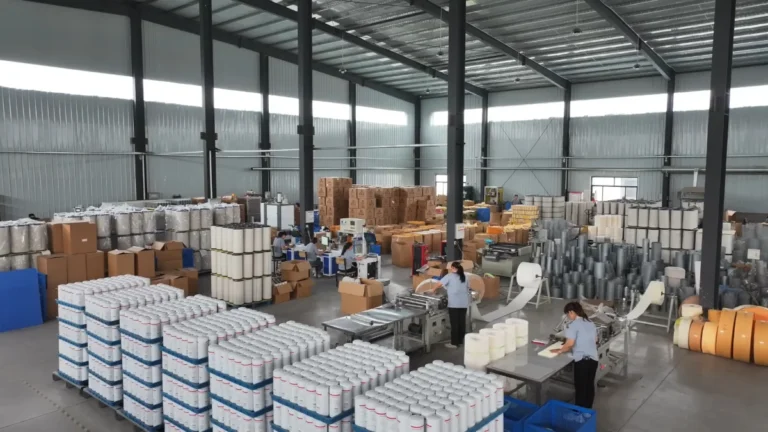
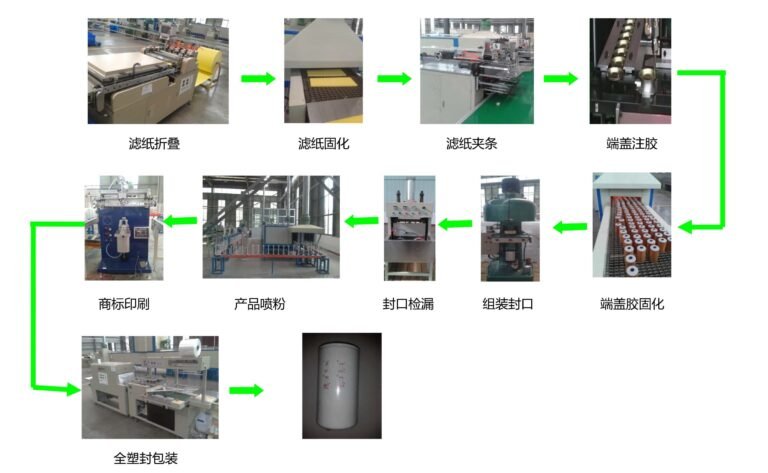
Choosing high-quality filter paper from a specialist supplier, and then building the filter in our own factory in Linxi County, Hebei, lets us control the quality chain from raw paper to finished filter. If your project needs a specific media grade, we can discuss filter paper quality, metal thickness and packaging options for your market.
How to Check High-Quality Filter Paper Before You Buy
You do not need a laboratory to ask the right questions. Before a bulk order, ask your supplier:
- Which media supplier and grade is used? A supplier that cannot answer is a warning sign.
- What test data is available? Look for efficiency, dirt-holding capacity and pressure drop results, and the standard used (for example ISO 5011 for air filters, ISO 4548-12 for oil filters, and ISO 19438 for fuel filters).
- Can you test samples? Compare the sample with your current filter on pleat count, pleat spacing, glue and end-cap bonding, and media thickness.
- Is quality consistent between batches? Ask about incoming media inspection and finished product testing.
- Does the filter match the OE number and dimensions? Even the best media cannot compensate for a wrong fit. Our filter cross reference guide explains how to verify part numbers.
FAQ
Q: Why does high-quality filter paper matter more than the filter’s outside appearance?
A: The paper does the actual filtering. Housing and seals hold the filter together, but media quality decides efficiency, dirt-holding capacity and service life.
Q: What filter paper does IXIN use?
A: IXIN uses filter paper from Longde Composite Materials Co., Ltd., a dedicated filter media manufacturer. Contact us if you need details on a specific model.
Q: Does high-quality filter paper always mean a longer service life?
A: Usually, because better media holds more dirt before restriction rises. Service life also depends on filter size, operating conditions and fuel or oil quality, so always follow the engine maker’s change interval.
Q: Are paper filters or synthetic and glass fiber filters better?
A: It depends on the application and the requirement. Different media types suit different efficiency, flow and cost targets, so discuss your engine and operating conditions with our team.
Q: Can I order with custom filter paper or packaging?
A: We support customized filter paper quality, metal thickness and packaging. Contact our sales team with your requirements.
Q: Can you provide test data for your filters?
A: Please send us the model you are interested in and tell us what data you need, and we will reply with the information available.
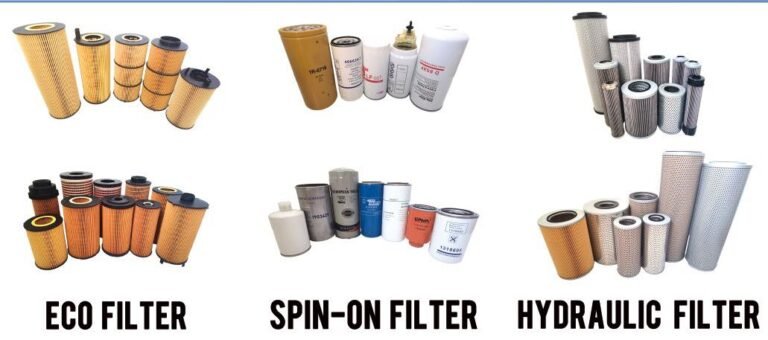
Looking for truck filters built with high-quality filter paper? Browse our air filters, oil filters and fuel filters, or send us the OE number and we will reply with specifications and a quotation.
Email: sales@ixinfilters.com | WhatsApp: +86 18833443345 | Get a quote
One Comment