Understanding air oil separator materials helps explain why two elements that look nearly identical can perform very differently once installed. Separation efficiency, pressure drop, and service life all trace back to specific material and construction choices made well before the element ever ships — not just the finished part’s outer dimensions.
Whether you’re sourcing separator elements for a compressor fleet or evaluating a new manufacturer, here are seven materials and construction elements worth understanding.
1. Borosilicate Glass Fiber Media
The core filtration layer in most quality air oil separators is borosilicate glass fiber, chosen for its ability to form an extremely fine, consistent fiber structure that supports high-efficiency coalescing filtration. The fiber diameter and density within this layer directly affect both separation efficiency and pressure drop — finer fibers generally improve separation but require careful engineering to avoid excessive flow restriction.
2. Cellulose Media (in Some Standard-Efficiency Designs)
Some standard-efficiency separator elements use cellulose-based media instead of or alongside glass fiber, offering a more cost-effective option for applications with less demanding oil carryover requirements. Cellulose media generally has a coarser fiber structure than borosilicate glass fiber, which affects both its separation efficiency ceiling and its typical service life compared to glass fiber alternatives.
3. Epoxy Resin Impregnation
Filter media in air oil separators is commonly impregnated with epoxy resin, which serves multiple purposes: it helps bond the fiber structure together for mechanical strength, provides resistance to the oils and operating temperatures the element will be exposed to, and helps the media maintain its shape and pleat structure under sustained pressure and airflow.
4. End Cap Material — Metal vs. Polymer
Separator elements are capped at each end to seal the filter media into a defined cylindrical or cartridge shape. End caps are commonly made from either metal (typically steel) or a molded polymer/composite material. Metal end caps generally offer higher structural rigidity and durability under demanding conditions, while polymer end caps can reduce weight and cost — the right choice depends on the specific compressor application and operating environment.
5. Center Tube Construction
A center tube (or core) provides structural support inside the element, helping the media resist collapse under the pressure differential that builds as the separator loads with contaminants. Center tubes are typically metal or a rigid composite, and their design — including perforation pattern and wall thickness — affects both structural integrity and the internal airflow path through the element.
6. Gasket and Seal Material
The gasket or seal that mates the element to its housing is typically made from a rubber or synthetic elastomer compound engineered to resist degradation from compressor oil and sustained operating temperatures. A gasket that hardens, cracks, or loses its seal integrity over time — even while the filtration media itself remains intact — can allow oil-laden air to bypass the element entirely, undermining the separator’s performance regardless of media quality.
7. Protective Outer Wrap or Coating
Many separator elements include a protective outer layer or coating designed to help the element resist mechanical damage during handling and installation, and in some designs, to provide an additional layer of structural support to the pleated media underneath. This layer needs to be permeable enough not to restrict airflow while still providing meaningful physical protection.
How Material Choices Translate Into Real-World Performance
These seven materials don’t function independently — they work together as a system, and a weak link in any one of them can undermine the others. A high-quality glass fiber media paired with a poorly sealed gasket, for example, still allows oil bypass regardless of how good the media itself is. This is why evaluating an air oil separator by material specification alone isn’t quite enough — construction quality and consistency across all seven elements matters just as much as any single material choice.
What to Ask a Manufacturer About Materials
- What specific filter media do you use, and how is fiber consistency maintained across production batches?
- What resin or impregnation process is used, and is it rated for my specific compressor oil type?
- What end cap and center tube materials do you use, and how are they tested for structural integrity?
- What gasket material do you use, and how is it rated for temperature and oil compatibility?
- Can you provide samples for independent testing before a bulk order?
A manufacturer who can answer these questions specifically — not just confirm that an element “fits” — is a much stronger signal of quality than price or appearance alone.
Built with Materials Engineered for Performance
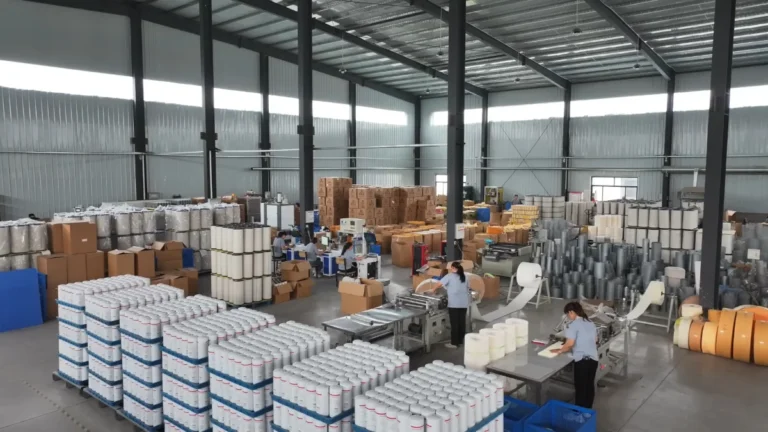
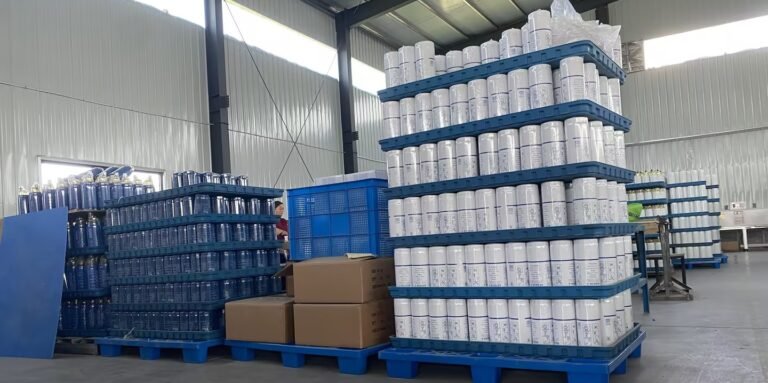
At IXIN Filter, we manufacture air oil separator elements using consistent, quality-tested materials across every component — filter media, end caps, center tubes, and gaskets — verified against OEM specifications rather than just matched by part number. Every batch is quality-checked before production, and we’re glad to share material and testing documentation with distributors and industrial buyers evaluating separator elements for their own compressor systems.
Want to see the materials behind our separator elements? Contact IXIN Filter to request a sample or product catalog.