
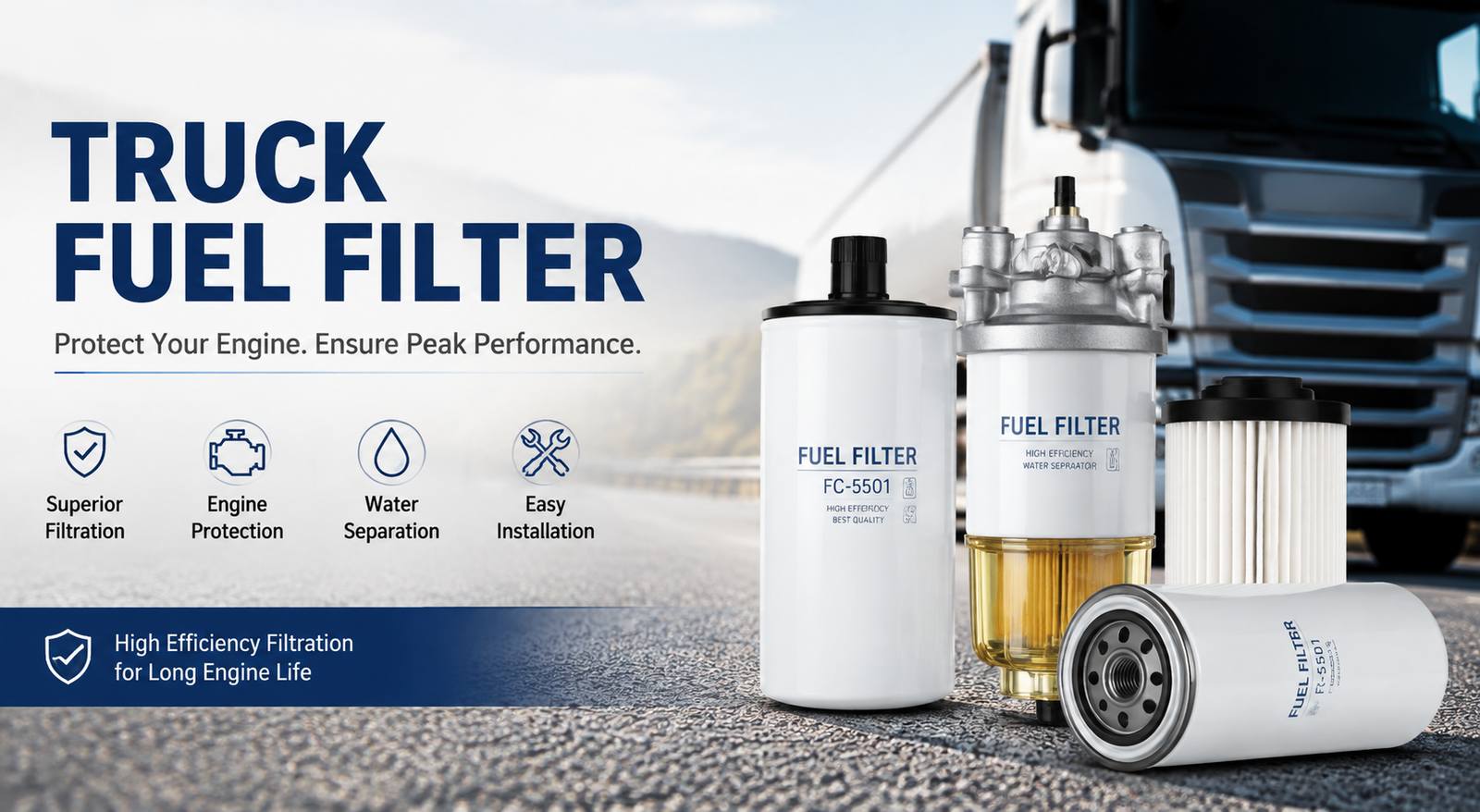
If you’ve ever searched for a replacement fuel filter and found five different part numbers that all claim to fit your engine, you’ve run into the core challenge of fuel filter cross reference: matching an OE (original equipment) part number to the correct aftermarket equivalent, across different brands, without guessing. Get it wrong, and you risk a filter that doesn’t seal properly, restricts flow, or simply won’t fit — all of which can mean unplanned downtime for a truck, wheel loader or piece of construction equipment. This guide walks through a reliable fuel filter cross reference process: how it actually works, where the numbers come from, and how to verify a match before you order.
Why the Same Fuel Filter Has So Many Part Numbers
A single physical fuel filter design is rarely sold under just one number. Here’s why:
- OE (Original Equipment) numbers — assigned by the engine or equipment manufacturer (Cummins, Caterpillar, Paccar, etc.) for their own parts catalog.
- Aftermarket brand numbers — companies like Baldwin, Donaldson, Fleetguard, WIX and Sakura manufacture equivalents and assign their own part numbers to the same physical filter.
- Regional or dealer-specific numbers — some distributors or import markets use their own internal SKU systems layered on top of the OE number.
All of these can refer to the same filter, or to filters that are dimensionally identical but rated for slightly different media or micron efficiency — which is exactly where buyers get tripped up during fuel filter cross reference.
5 Proven Steps to Get Your Fuel Filter Cross Reference Right
1. Start with the OE number, not a brand name. The OE number (stamped on the equipment nameplate or found in the parts manual) is the most reliable anchor point. Searching by OE number first — rather than “Baldwin filter for Cummins” — reduces the chance of pulling in a near-match that isn’t actually correct for your engine variant.
2. Verify physical dimensions, not just the part number list. Two filters can share a cross reference number but differ slightly in thread size, outer diameter, or overall height across production years or regional variants. Before ordering in bulk, confirm:
- Thread size and gasket diameter
- Outer diameter and overall height/length
- Micron rating and media type (especially for water-separating fuel filters)
3. Cross-check against at least two independent sources. A single retailer’s cross reference list can contain typos or outdated data. Compare the OE number against the filter manufacturer’s own catalog — for example, Baldwin publishes a searchable Filter Finder cross-reference tool, and Donaldson, Fleetguard and WIX offer similar lookups — and check a second independent source before treating a fuel filter cross reference match as confirmed.
4. Confirm engine year and configuration, not just the model name. Equipment models often span multiple production years with different fuel system configurations. A filter that fits a “Peterbilt with Cummins ISX15” one year may not fit the same truck model built two years later if the engine was updated. Always match against serial number ranges when precision matters.
5. When in doubt, ask the manufacturer directly. If your application is unusual — custom equipment, an older model, or a filter with conflicting cross reference data across sources — a filter manufacturer that can review your OE number and confirm fitment (rather than just relisting scraped cross reference data) is a safer bet than guessing.
Common Fuel Filter Cross Reference Mistakes to Avoid
- Assuming “fits” means “identical.” A filter that physically fits the housing may still have a different micron rating or water-separation capability than the original — which matters for engine protection even if it screws in fine.
- Relying on outdated cross reference charts. Part numbers get superseded. An old chart might point you to a discontinued number instead of its current replacement.
- Ignoring regional variants. The same equipment model sold in different regions can use different fuel system configurations, especially for emissions compliance.
- Buying based on price alone. The cheapest listed “equivalent” isn’t always dimensionally accurate — verify specs before ordering in volume.
Fuel Filter Cross Reference in Practice: A Real Example
Here’s what a properly verified fuel filter cross reference table looks like for a heavy-duty fuel filter — using our FF5825NN fuel filter for Cummins ISX15 as an example:
| Brand / Source | Part Number |
|---|---|
| Cummins OE | FF5825NN |
| Cummins OE | 5599456 |
| Cummins OE | 5365988 |
| Donaldson | DBF6776 |
| Baldwin | BF46129 |
| WIX | WF10515 |
Notice that each brand’s number is listed against its source — this is what a trustworthy cross reference table should look like, rather than a flat list with no attribution. The same approach applies to fuel/water separator filters, like our 2277129 fuel filter water separator for Paccar MX-13, where confirming the OE number against the engine’s emission stage matters just as much as matching the physical dimensions.
FAQ
Q: Can I trust cross reference numbers listed on shopping sites like Amazon or eBay? A: Use them as a starting point, not a final answer. Cross-check the numbers against the filter manufacturer’s own published cross reference tool or contact the manufacturer directly, especially before placing a bulk order.
Q: Does a matching part number guarantee the same filtration performance? A: Not always. A physically compatible filter can still differ in micron rating or media quality. If filtration performance is critical for your application, ask the supplier for the actual specifications, not just confirmation that “it fits.”
Q: What should I do if I can’t find a clear cross reference for my OE number? A: Provide your OE number and, ideally, your equipment’s serial number or production year to a filter manufacturer directly. A manufacturer that produces the filter (rather than just reselling it) can usually verify fitment more reliably than a generic parts database.
Q: How often do OE part numbers change or get superseded? A: It varies by manufacturer and engine platform, but superseded numbers are common — especially after emissions updates or mid-cycle engine revisions. Always check for the current active part number rather than relying on an older reference.
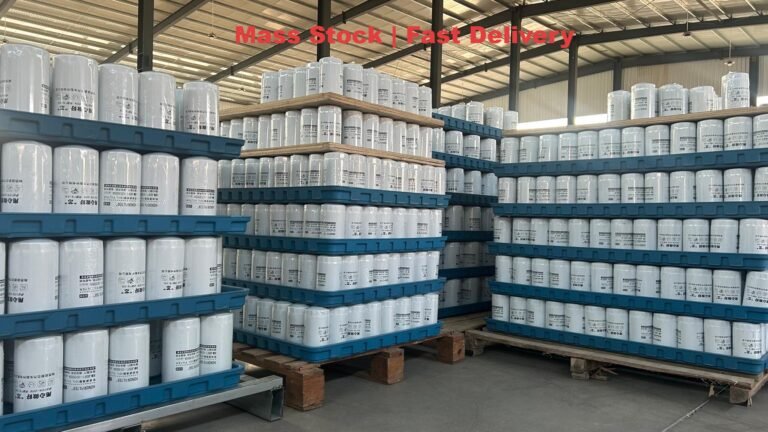
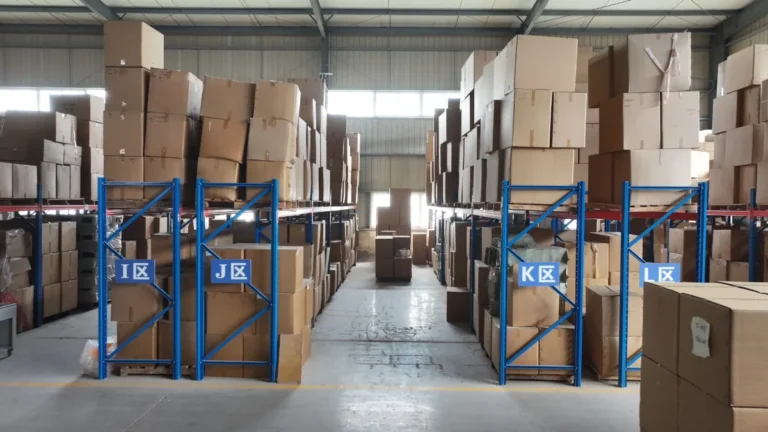
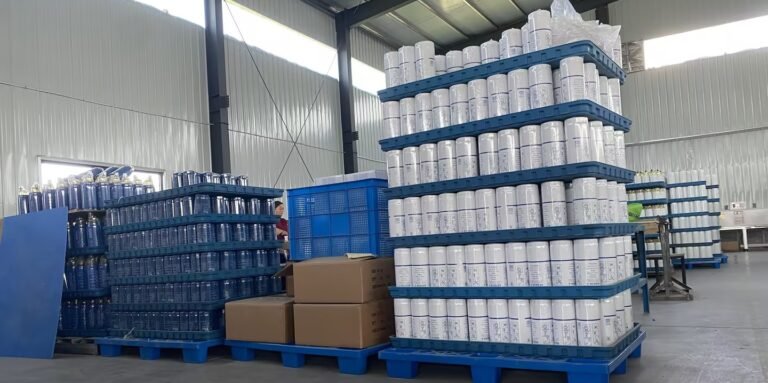
Looking for a specific replacement filter? Browse our fuel filter catalog, or contact our sales team with your OE number for fitment confirmation and bulk pricing.


5 Comments